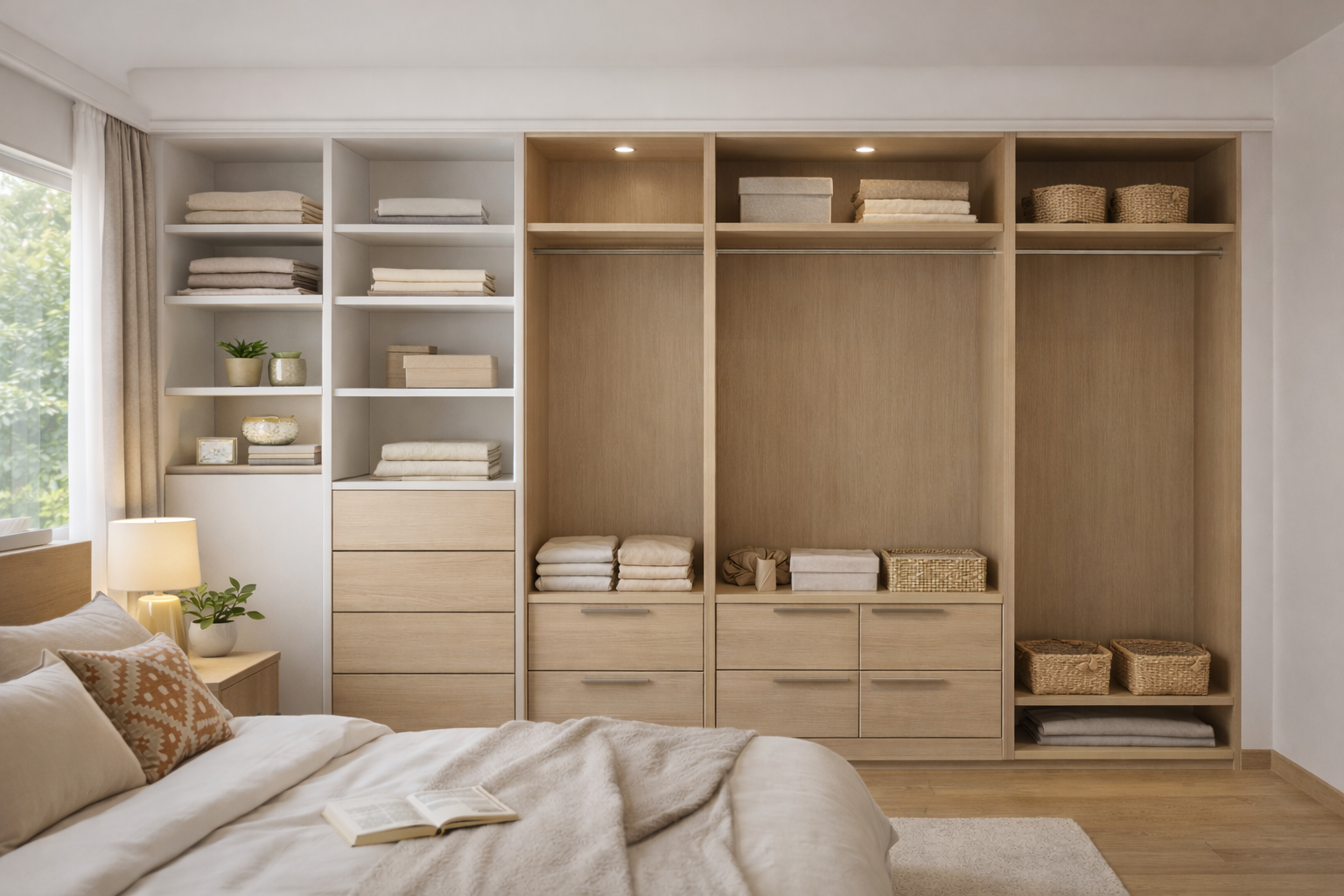
Decide your Design: How to Design a Wardrobe for a Home
Ready to elevate your interior? Contact us today for a personalized consultation that brings your vision to life.


Ready to elevate your interior? Contact us today for a personalized consultation that brings your vision to life.
You know that moment when you open your wardrobe and it’s pure chaos—socks everywhere, shirts tangled, and you’re already late for work? That everyday frustration is more common than you think.
The good news? Learning how to design a wardrobe isn’t a designer-only secret. It’s about small, smart decisions that make daily life easier. Imagine neat shelves, everything in its place, and a bedroom that instantly feels more spacious and organized.
Whether you’re working with an 800 sq ft Indian apartment or a larger home, thoughtful wardrobe design for home can completely transform how your space functions. With the right planning, even the tightest corners can work smarter not harder.
Let’s bring order to the chaos, one well-planned shelf at a time.
A poorly planned wardrobe can easily turn mornings into a daily struggle. Searching for one clean outfit wastes time and adds unnecessary stress. Smart wardrobe planning changes that completely.
When you understand how to design a wardrobe properly, even compact spaces work efficiently. The layout can be tailored to real routines—workwear placed upfront for quick access, children’s clothes stored at reachable heights, and dedicated sections for accessories like scarves or belts.
Homes that shift to thoughtful bedroom wardrobe ideas often notice more than just better organization. Clutter reduces, impulse buying slows down, and the room itself feels lighter and more breathable. Most importantly, mornings become smoother and more predictable.
If your space feels crowded or chaotic, a well-designed wardrobe might be the upgrade you didn’t know you needed.
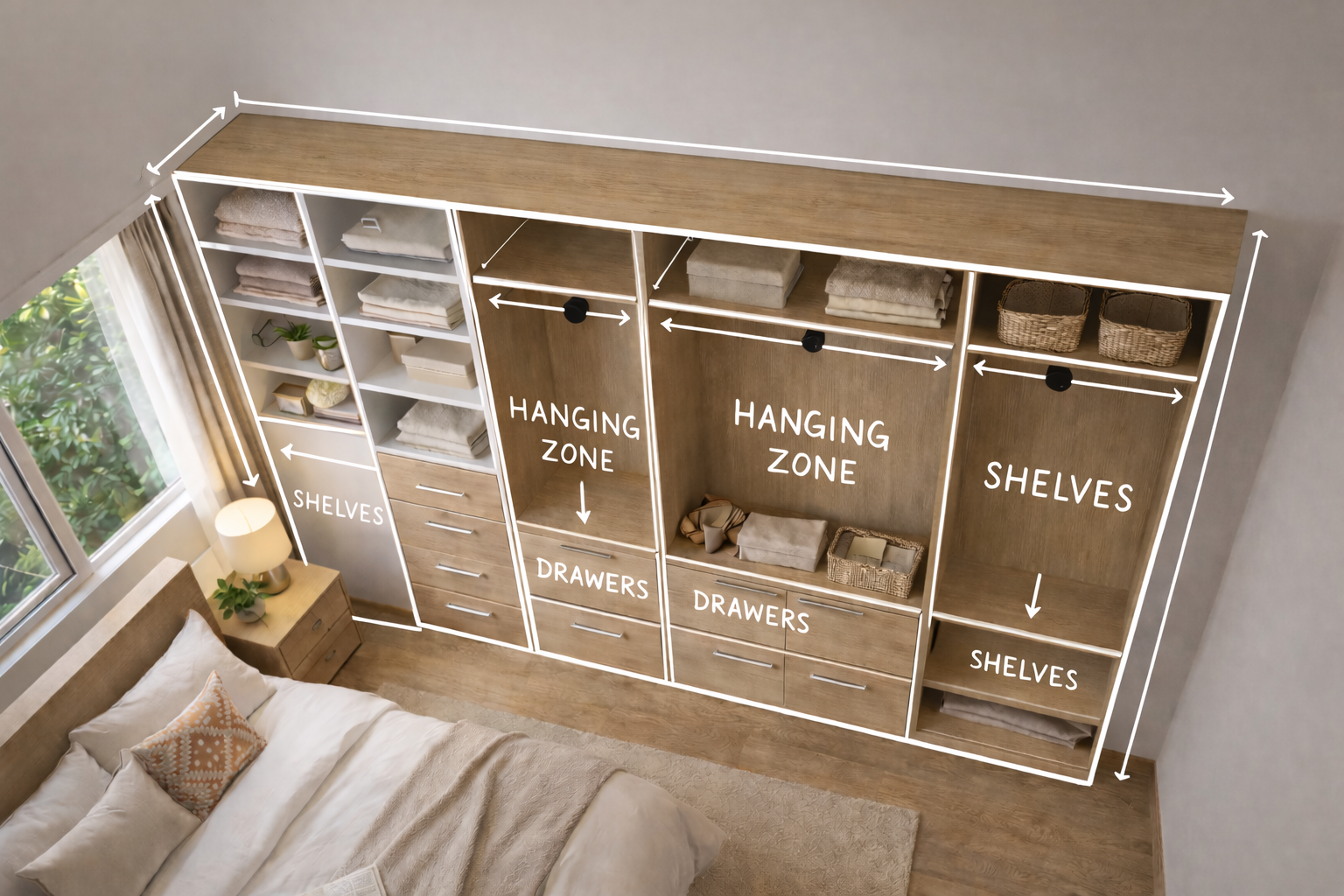
Before designing a wardrobe, accurate measurements are essential. Use a tape measure to note wall height, width, depth, and door swing clearances. These details help avoid layout issues and ensure the wardrobe fits seamlessly into the room.
Next, assess storage needs by category. Count how many clothes need hanging space, how many require folding, and how many shoes or accessories need dedicated storage. For single users, a balance of hanging and shelving usually works well. For families, additional shelves and drawers improve organization and accessibility.
A well-planned wardrobe layout follows simple logic:
Sketching the layout—digitally or on paper—helps visualize proportions and spacing before execution. This approach ensures a modern wardrobe design that uses every centimeter efficiently and supports everyday routines with ease.
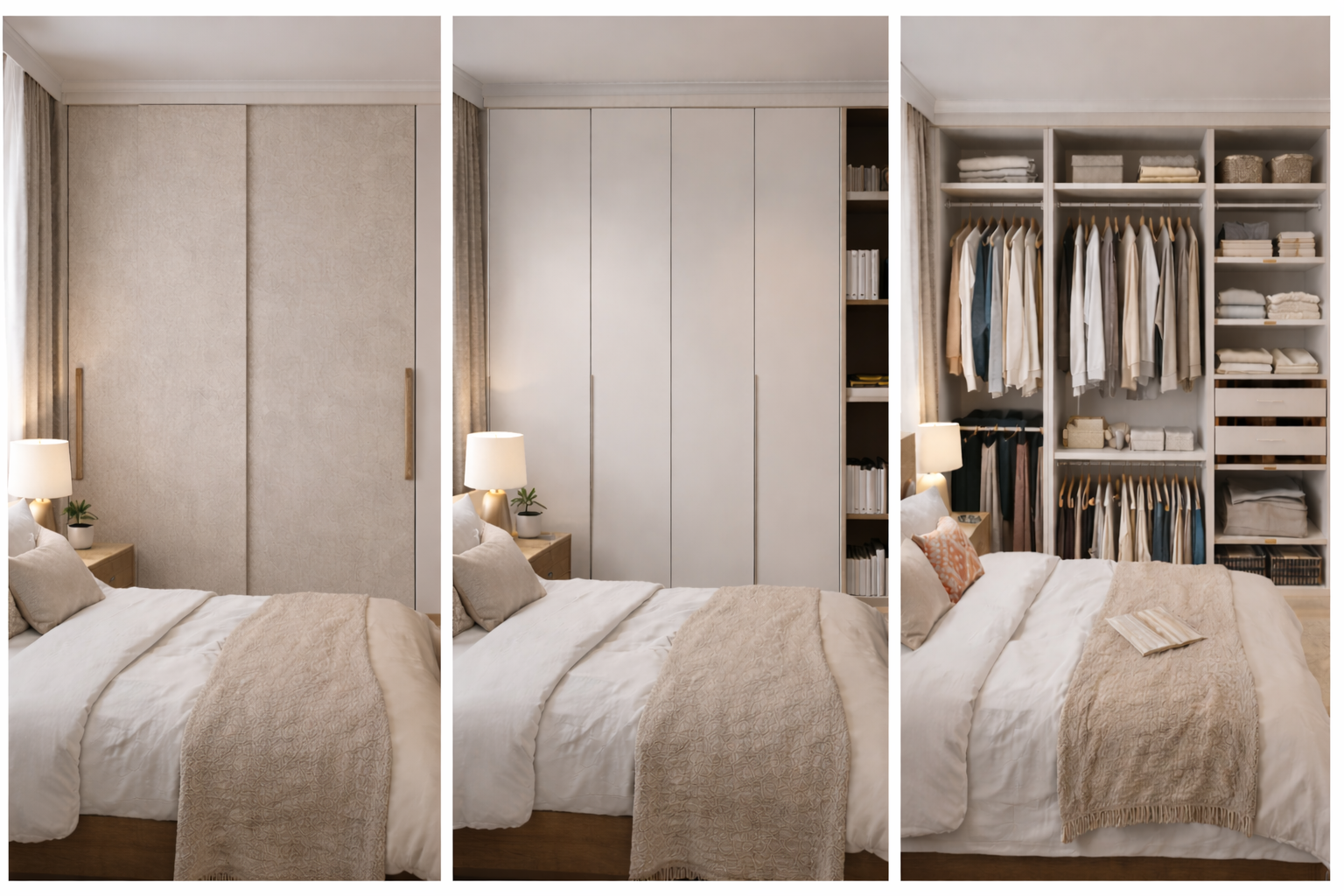
Your room's the boss pick what vibes with it. Here's the lineup of bedroom wardrobe ideas that may help you to choose a right design:
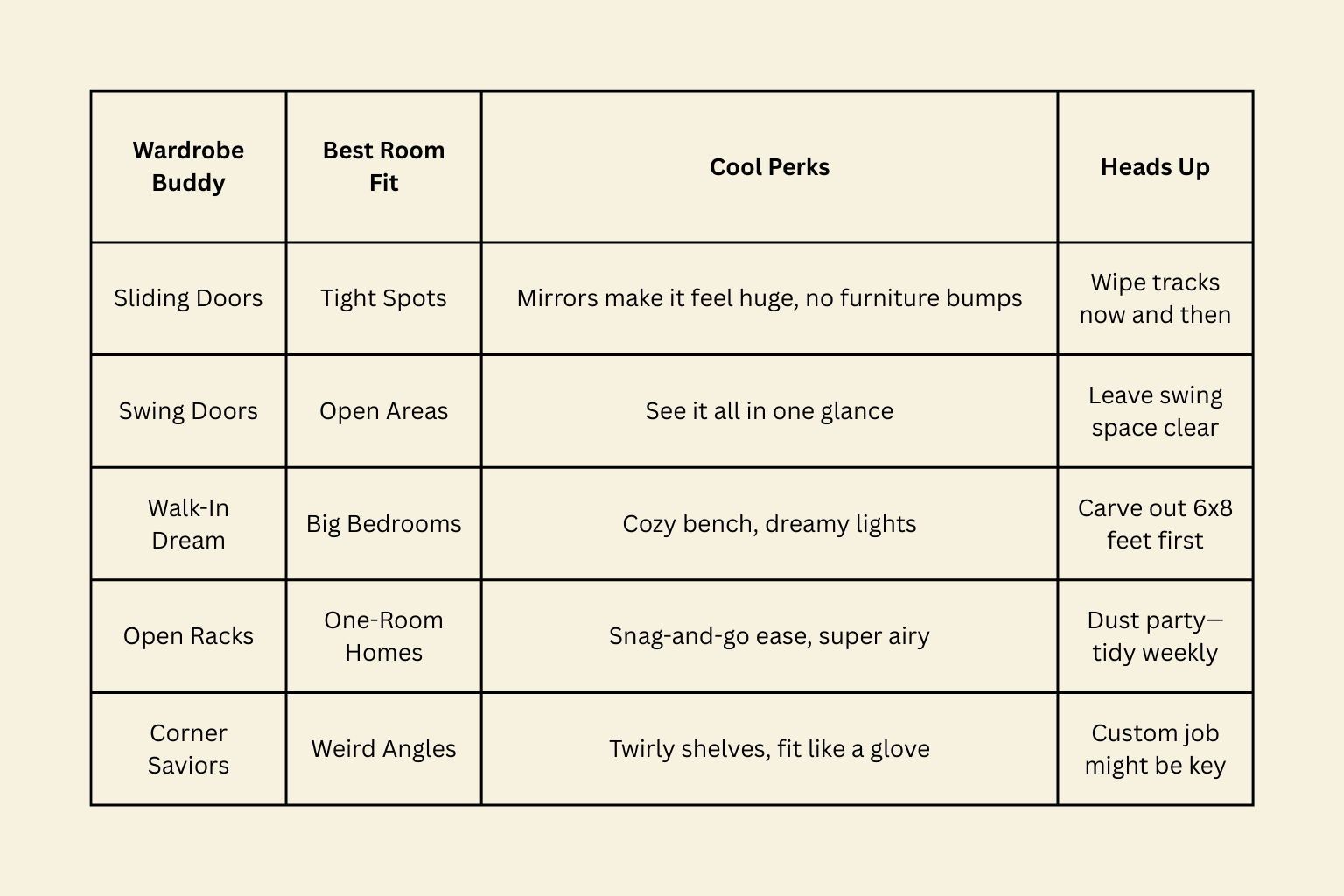
Humid vibes? Ventilated picks keep that musty smell away in your wardrobe design for home.
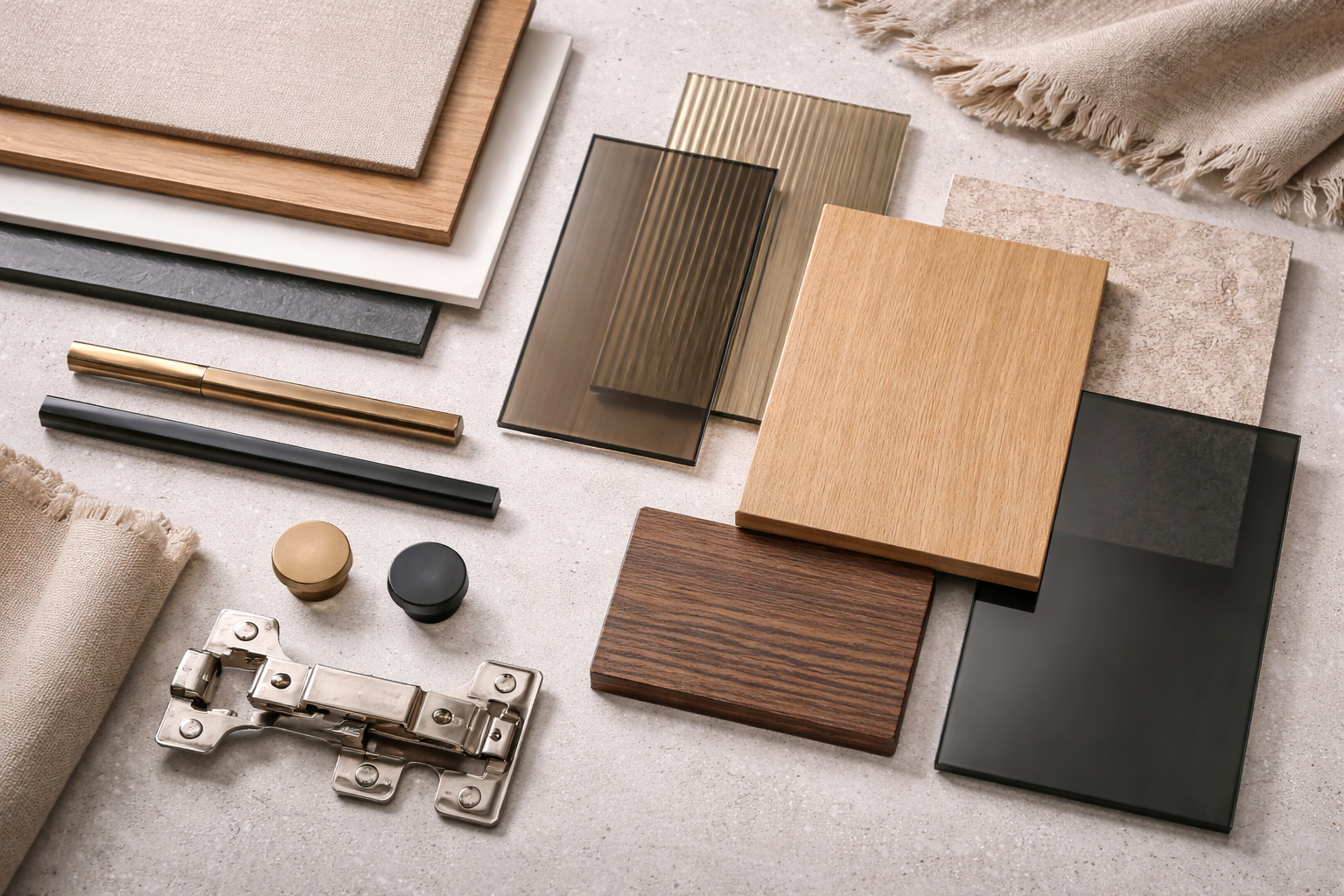
Choosing the right materials plays a crucial role in how to design a wardrobe that lasts. Budget-friendly options may seem appealing initially, but durability and moisture resistance should always be priorities—especially in humid or monsoon-prone climates.
Reliable material choices include:
Finishes in soft greys or warm wood tones help conceal fingerprints and everyday marks, making them ideal for modern wardrobe design. For those seeking sustainable options, bamboo is lightweight, resistant to pests, and an eco-conscious choice that blends durability with environmental responsibility.
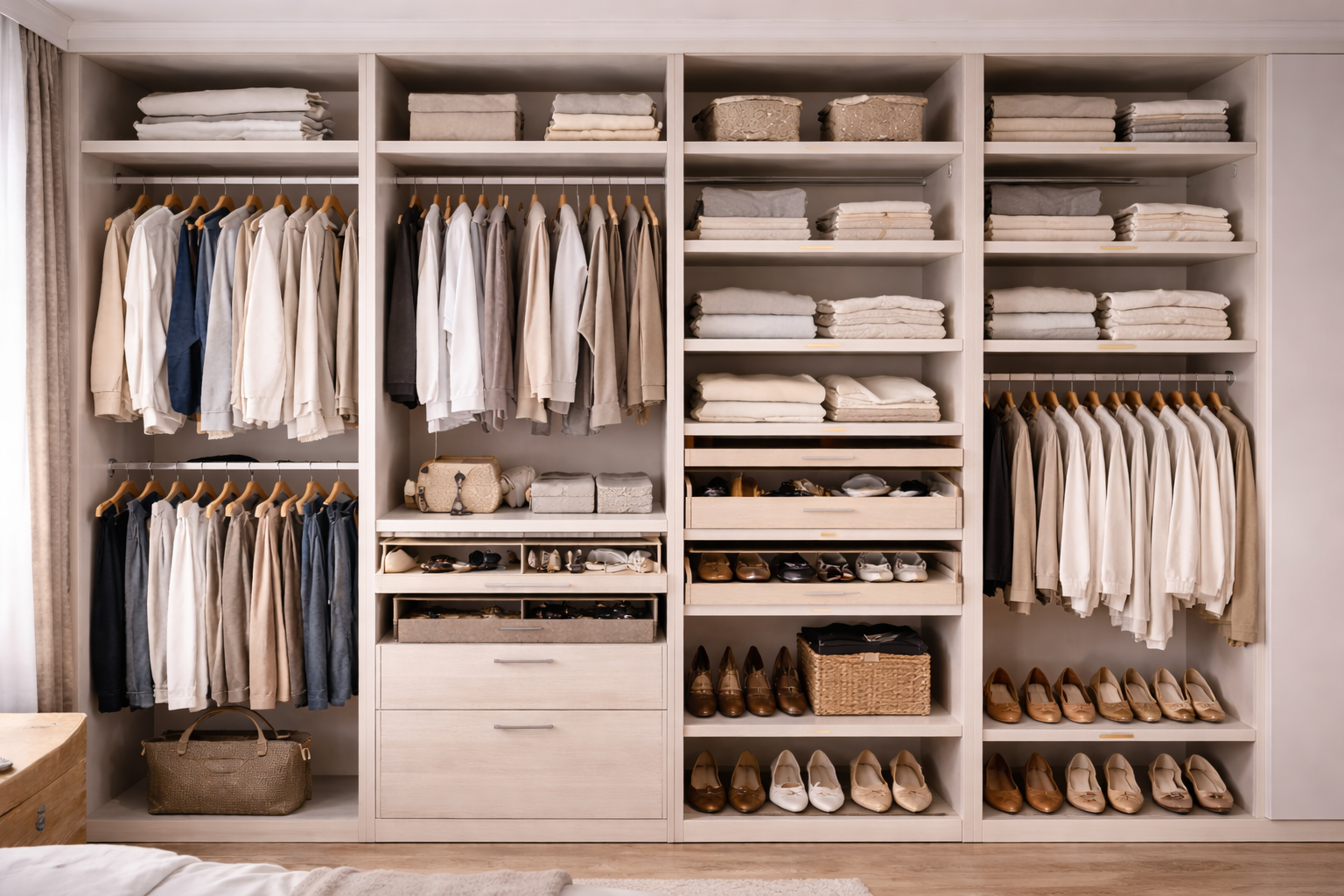
Think of wardrobe planning the same way kitchen drawers are organized—zoning makes everything easier. Well-defined sections improve access, visibility, and long-term usability, making them essential for effective bedroom wardrobe ideas.
Key zoning elements to consider:
Integrated lighting along the top or sides of the wardrobe significantly improves visibility and helps distinguish colors instantly, even in deeper sections.
With thoughtful zoning and proportioning, a compact wall space can comfortably accommodate shelves, hanging sections, and drawers—demonstrating how efficient wardrobe design for home relies more on planning than on size.
When planning to design a wardrobe, costs can vary widely based on size, materials, and finishes. Entry-level wardrobes typically start around ₹15,000, while premium or custom designs can go up to ₹1.5 lakh or more. Sliding-door wardrobes usually begin at approximately ₹20,000, while walk-in wardrobes often fall in the ₹1–2 lakh range, depending on layout and detailing.
Smart ways to manage costs include:
It’s also advisable to allocate an additional 10% of the budget for installation and finishing costs. A well-designed wardrobe not only improves daily convenience but also enhances the overall resale value of the home.
Certain design oversights can shorten the life of a wardrobe and reduce everyday usability. Avoiding these common mistakes is essential for a durable and functional wardrobe design for home.
Key pitfalls to avoid:
Addressing these issues during the planning stage ensures a wardrobe that remains sturdy, adaptable, and easy to use for years to come.
A well-designed wardrobe isn’t just about storage—it’s about making everyday life smoother. When space is measured right, layouts are planned smartly, and materials are chosen with care, your home feels calmer, cleaner, and easier to live in.
At Ineazy, we believe great wardrobe design for home starts with understanding how you live. From compact apartments to spacious bedrooms, thoughtful planning helps eliminate clutter, maximize every inch, and create storage that adapts as your needs change.
If you’re ready to move from chaos to clarity, now’s the time to act. Measure your space, define your priorities, and let the right design bring order to your mornings.
Design smarter. Live easier.
Start your wardrobe journey with Ineazy today.
Subscribe
Join our newsletter for the latest updates and design insights.
"Ineazy" trademark is owned by Clubtail Interior Designs Private Limited and licensed to its affiliates and subsidiaries. All rights to this website, including copyright in content represented thereat, vest in Clubtail Interior Designs Private Limited and/or its respective affiliates and subsidiaries. All rights reserved.